

What happens to your drawings, stated plainly.
Most AI takeoff tools do not publish a page like this one. We think a 55-year-old contractor deciding whether to upload a live project’s drawings deserves a straight answer on storage, training, retention and who to call — not a marketing page that avoids the question.
 SOC 2 · in progress
The three questions everyone actually asks
Not by default, and not without a disclosed opt-in that does not exist today. See section 2.
Scale confirmation before takeoff, review-and-approve before an AI-drafted RFI sends. Not configurable away.
Not achieved, not claimed. Target stated in section 7, with no vague promises attached.
How drawings are stored and encrypted
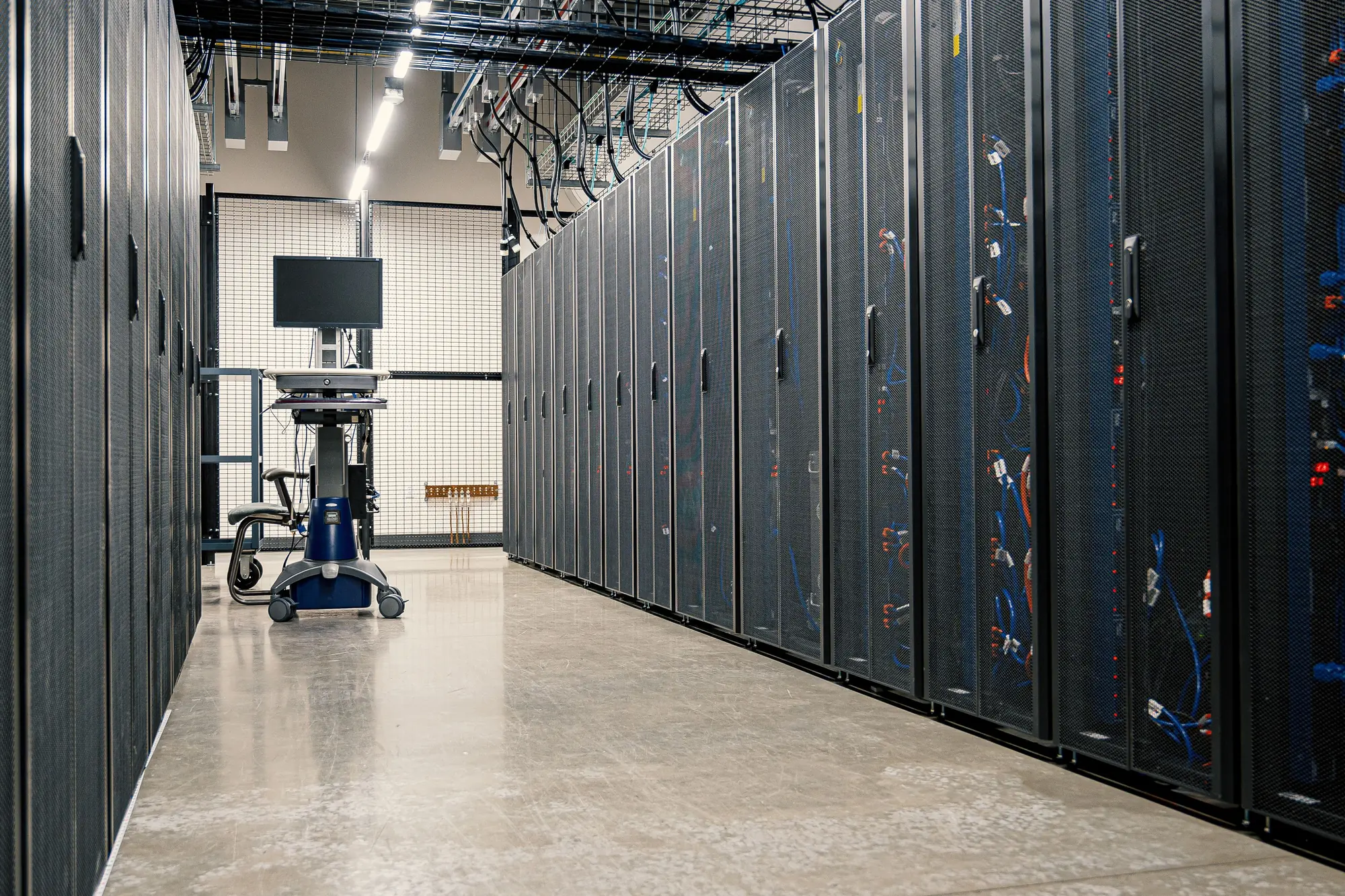
Uploaded drawing sets, specifications, budgets and every document you give PiloBuild are stored on encrypted infrastructure operated by our cloud provider. We do not operate our own physical data centers.
- In transit: every connection uses TLS 1.2 or higher, including uploads, API calls and the web application itself. There is no unencrypted path in.
- At rest: files and derived data (takeoffs, estimates, registers, logs) are encrypted with AES-256 on the underlying storage layer.
- Key management: encryption keys are managed by our cloud provider’s key management service, not handled in application code.
- Isolation: each customer’s project data is logically separated by account and project; a pilot on one job does not expose another customer’s drawings.
Your drawings do not train our models by default
This is the question we get asked first, so we are answering it first and in writing. Content you upload — drawing sets, specifications, budgets, RFIs, submittals — is used to produce your takeoff, your estimate and your registers. It is not used to train or fine-tune any AI model, whether operated by us or by a third-party model provider, as a default behavior.
We use commercial AI model providers for drafting tasks such as RFI language and document classification. Our agreements with those providers are structured so customer content submitted through PiloBuild is not retained by the provider to train their general-purpose models. If a specific opt-in feature is ever introduced that would use your data for model improvement, it will be off by default, disclosed here before it ships, and controllable per account.
Ask us for the current subprocessor list and model-provider data-use terms during a pilot or security review. We will give you the current document rather than a marketing summary of it.
Where your data lives
How long we keep it, and how to get it deleted
Project data is retained for as long as your account is active, so a pilot can be compared against your own numbers and a live project can keep running. You can request export or deletion at any time by emailing security@pilobuild.com.
- Active accounts: data is retained for the life of the account and the projects on it.
- Closed accounts: project data is deleted from primary storage within 90 days of account closure, absent a legal hold.
- Backups: deleted data is purged from backups on the next backup rotation after deletion, not retained indefinitely.
- Export first: every export path (spreadsheet, PDF, source documents) is available to you before any deletion is processed.
Who can see your project, today and on the roadmap
Access inside PiloBuild is scoped per account and per project. A named seat sees the projects it has been added to; a guest you invite to answer one RFI sees that item, not your whole job.
- Today, at launch
- Email and password authentication with per-project role assignment (owner, editor, guest). Passwords are hashed, never stored in plain text.
- Roadmap
- Single sign-on via SAML is part of the Business and Enterprise tiers and is not available on Solo or Team. Directory provisioning beyond SAML is not built yet; this page will be updated when it is, and not before.
- Internal access
- Employee access to customer project data is limited to what is needed for support and is logged. We do not browse customer drawings out of curiosity.
Who else touches the data, and why
PiloBuild uses a small number of subprocessors to run infrastructure, storage and AI drafting features. We publish the current list rather than describing it in the abstract.
SOC 2: in progress, not achieved
PiloBuild is not SOC 2 certified as of this MVP launch. We are not going to say otherwise, and we are not going to use language that implies a certification we do not hold.
If a signed SOC 2 report is a condition of your procurement process, tell us during a pilot. We would rather lose a deal on an honest timeline than win one on a false claim.
System status
A public status page ships with the MVP launch in Q4 2027 and will show current availability and incident history. Until then, uptime questions during a pilot go to security@pilobuild.com and get a direct answer, not a dashboard.
The two gates we will not remove
This is a security page, and the biggest risk in AI-assisted construction software is not a data breach — it is an AI-drafted number or letter going out unreviewed. Two checkpoints are mandatory, not configurable, and not a beta limitation we plan to remove.
Found a vulnerability? Tell us directly.
Email security@pilobuild.com with a description of the issue and steps to reproduce it. We do not run a paid bug-bounty program at MVP launch, but we commit to the following for good-faith reports:
- Acknowledgement of your report within 3 business days
- An investigation and a status update within 9 business days
- No legal action against a researcher who reports in good faith, avoids data destruction, and gives us a reasonable window to fix the issue before public disclosure
6 questions about security
Do you train your models on customer drawings?
No. Drawings, specifications, budgets and any other project data you upload are not used to train or fine-tune any AI model, ours or a vendor’s, by default. Uploaded content is used only to produce your takeoff, estimate and registers.
If that ever changes for a specific feature, it will be opt-in, disclosed in the product and in this policy before it applies to your account, and you will be able to opt out. Nothing about that exists today.
Where is our data hosted, and does it leave that region?
Production data is hosted with a United States cloud infrastructure provider, in United States data center regions. We do not currently offer a choice of hosting region or contractual data-residency commitments outside the United States.
The Business and Enterprise tiers include a data-residency attestation stating where data is held. A contractual commitment to a region outside the United States is a conversation for Enterprise during a security review, not a default we can promise today.
How is our data encrypted?
In transit, all connections to PiloBuild use TLS 1.2 or higher; there is no unencrypted path into the product. At rest, uploaded drawings, documents and derived data (takeoffs, estimates, registers) are encrypted using industry-standard AES-256 on the underlying storage layer.
Encryption keys are managed by our cloud infrastructure provider’s key management service. We do not hand-roll cryptography.
What happens to our drawings if we cancel or the pilot ends?
You export your data first: takeoffs, estimates, registers and logs export to spreadsheet and PDF, and source documents come back out in the format you put in. After export, you can request deletion.
Absent a deletion request, project data belonging to a closed account is deleted from primary storage within 90 days and from backups on the normal backup rotation schedule described in the Privacy Policy. We do not retain project drawings indefinitely as a default.
Is PiloBuild SOC 2 certified?
Not yet. We have not completed a SOC 2 audit and we do not claim SOC 2 compliance today. We are building the control set a SOC 2 Type II audit requires and are targeting a Type I readiness assessment within the first year after the Q4 2027 MVP launch, with a Type II report to follow.
We would rather tell you exactly where we stand than imply a certification we do not hold. If SOC 2 status is a condition of your security review, tell us in a pilot conversation and we will give you a direct, current answer.
Who can we talk to about a security question or a vulnerability?
Email security@pilobuild.com. For a suspected vulnerability, use the responsible-disclosure process on this page: we acknowledge reports, investigate, and do not pursue legal action against good-faith researchers who follow it.
Ask us the hard question.
Email security@pilobuild.com and a named person replies. Vulnerability reports go to the same address.